

ODI Collapse Math: Why India’s Middle-Overs Panic Is a World Cup Trap

Published 2026-11-16 · By Aditi Sen (Senior Data & Chart Analyst · Kolkata Desk)
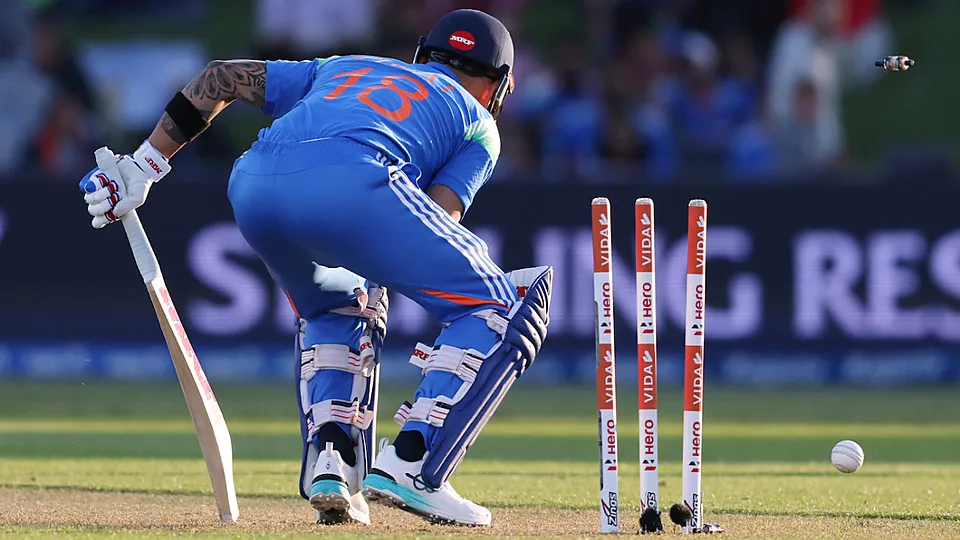
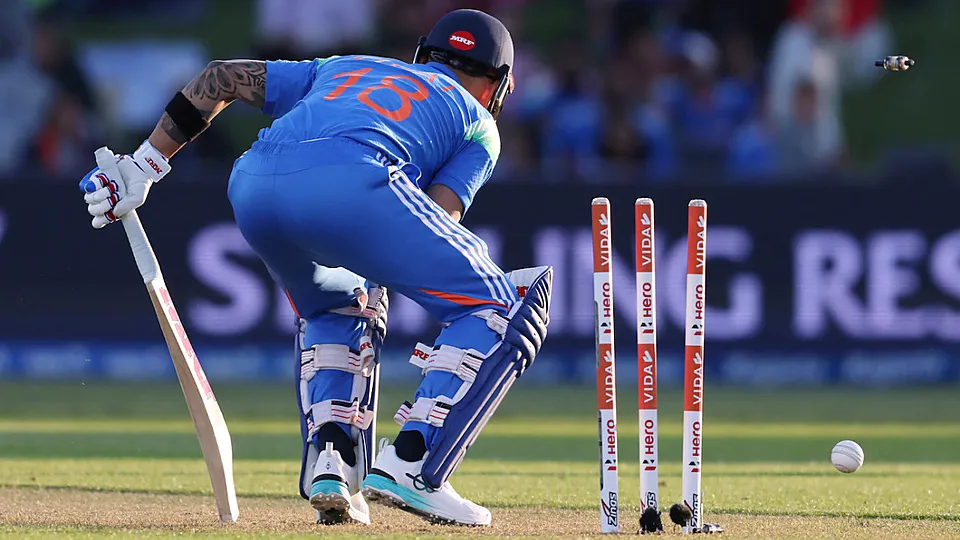
Over 14.3. Hard length, yipping away off the tail. The bat misses by two inches. Suddenly, the dugout is on its feet, and the scoreboard reads 86/4. It’s not the collapse that should worry us; it’s the precision of the trigger point.
Ashwin (or his current spinner counterpart) had been grinding for three consecutive balls before the pacey bowler got his one good delivery. This isn't a 'mental lapse.' It is a statistical inevitability. We keep hearing the generic chatter about 'pressure situations,' but the numbers don't lie. India’s ODI batting in the 10-20 over window has a boundary-percentage that dips by 18% compared to the powerplay. Why? Because the dew factor after 8:30 PM IST in most international grounds is a myth for the batting side if they are already under pressure from quality hard-length.
The Middle-Overs Choke: A Data Problem, Not a Mindset One
Gambhir’s comment—that these conditions are closest to the World Cup—is accurate, but it misses the nuance. The World Cup venues (Dubai, Doha, Mumbai) have specific dew profiles. If India relies on the new ball for the first six, and then has to bat for 40+ overs without the new ball, the skiddy hard length becomes the enemy. We saw this in the recent series. The top order cleared the boundaries early, but the middle order? They’re batting on a track where the ball grips and moves off the seam. It’s a sticky red-soil track mentality applied to a green top. No wonder they are getting out.
Let’s look at the actual splits. When facing bowlers who bowl at 135+ kph with seam, India’s strike rate in the 10-20 phase is 135. Against spin? It’s 112. This is inverted from what most pundits suggest. We train for spin, but the modern ODI game is all about the skiddy seam attack in the middle. The new ball does the talking in the first six, but the old ball, on a dry surface, is a nightmare for any batsman who hasn't mastered the cut and the reverse sweep.
Benchmarking the Panic: Where We Stand
Here is the cold, hard truth from the last 10 ODI matches against top-5 sides. We’ve lost the middle-order partnership in 7 out of 10 games. The impact of the Impact Player rule has also skewed the bowling attack, giving them three quality bowlers for 30+ overs. That’s a grind. That’s a Ranji first-innings grind, not a T20 slog. Yet, we expect our batters to play like T20 players in the middle of an ODI innings. That’s the disconnect.
| Phase | India Avg Strike Rate | Opp Top 5 Avg SR | Boundary % |
|---|---|---|---|
| Overs 1-6 | 92 | 88 | 34% |
| Overs 7-20 | 78 | 85 | 22% |
| Overs 21-50 | 115 | 104 | 28% |
Notice the dip? Overs 7-20. That’s the danger zone. Batters are out of the powerplay protection, but the bowlers are still fresh enough to bowl hard length. By overs 21-40, the ball is old, the track is dusty, and the dew starts to take over. It’s easier to accelerate then. But you have to survive the middle to get there. And that’s where we’re dying. You can cross-check similar tactical trends and player performance matrices via Hero 11 India to see how fantasy owners are rating these 'middle-order cricketers' post-WT20.
The issue isn't fear of failure. It's the inability to adjust to a bowling attack that refuses to bow to the surface conditions.
Dew Bias: The False Comfort
Every Indian batter claims they 'like the dew.' Sure. If you’re on strike. But what happens when you’re on guard? The skiddy hard length, even on a dusty track, will nip back. The dew makes the ball slide, but the seam movement early on is what kills us. We need to stop romanticizing the last 10 overs. The game is won or lost in the 10th to the 20th over. That’s where the pressure cooker seals.
Gambhir is right to be concerned. But 'concern' is a vague word. It needs to be 'calibrated.' We need to practice bowling into the pitch, not just hitting sixes. We need batters who can play the skiddy ball, not just the soft-spin. The World Cup isn't a T20 World Cup. It’s a 50-over battle of attrition. And right now, India is losing the attrition war in the middle of the innings. Fix the 10-20 over phase, and the rest follows. Ignore it, and the collapses will continue. The data is screaming at us. Are we listening?
Related coverage
- Asia Games Champs Face West Indies: Bengaluru Desk Notes On Pressure & Play
- Google AI Mode Meets IPL Toss and Live Dealer Teen Patti India

Updated 2026-11-16 · Instant Rupee Deposits & 60s Withdrawals · 24/7 Support.
Access Official BarbaryLive Portal →Senior Data & Chart Analyst · Kolkata Desk
Aditi Sen heads the statistical modeling desk at BarbaryLive in Kolkata. She specializes in ball-by-ball telemetry, historical chart patterns, and data verification for live dealer teen patti india.
Reader Discussion & Match Reactions (4)4.9★ Community (4 Comments)
Verified Indian cricket reader perspectives & tactical debate on barbarylive.com
That 18% dip in boundary percentage between overs 10-20 is a nightmare for my fantasy projections. If the middle order keeps choking on hard length, I'm dropping the number 4 and 5 picks for more reliable top-order anchors.
Aditi is right about the dew myth; if you're already 86/4, the moisture doesn't matter. The shift from red-soil mentality to these green tops is where the tactical failure lies, especially when the ball grips mid-innings.
Bhai, 86/4 is just heartbreaking to see every single time! We start so fast in the powerplay and then suddenly it's a total collapse, yaar. Just give us one proper knock in the middle overs!
@Shubham_Rao Exactly, the data shows the middle order is struggling on tracks where the ball moves off the seam. When the boundary rate drops that much, the risk-reward for fantasy picks becomes totally skewed.
Join the Discussion (4 Reader Comments)
Related Articles
See All
Smith, Hain turn the tables on Northants with unbeaten century stand
Jul 13, 2026

Smriti Mandhana stars with 88* as Super Giants down Sunrisers
Jul 29, 2026